
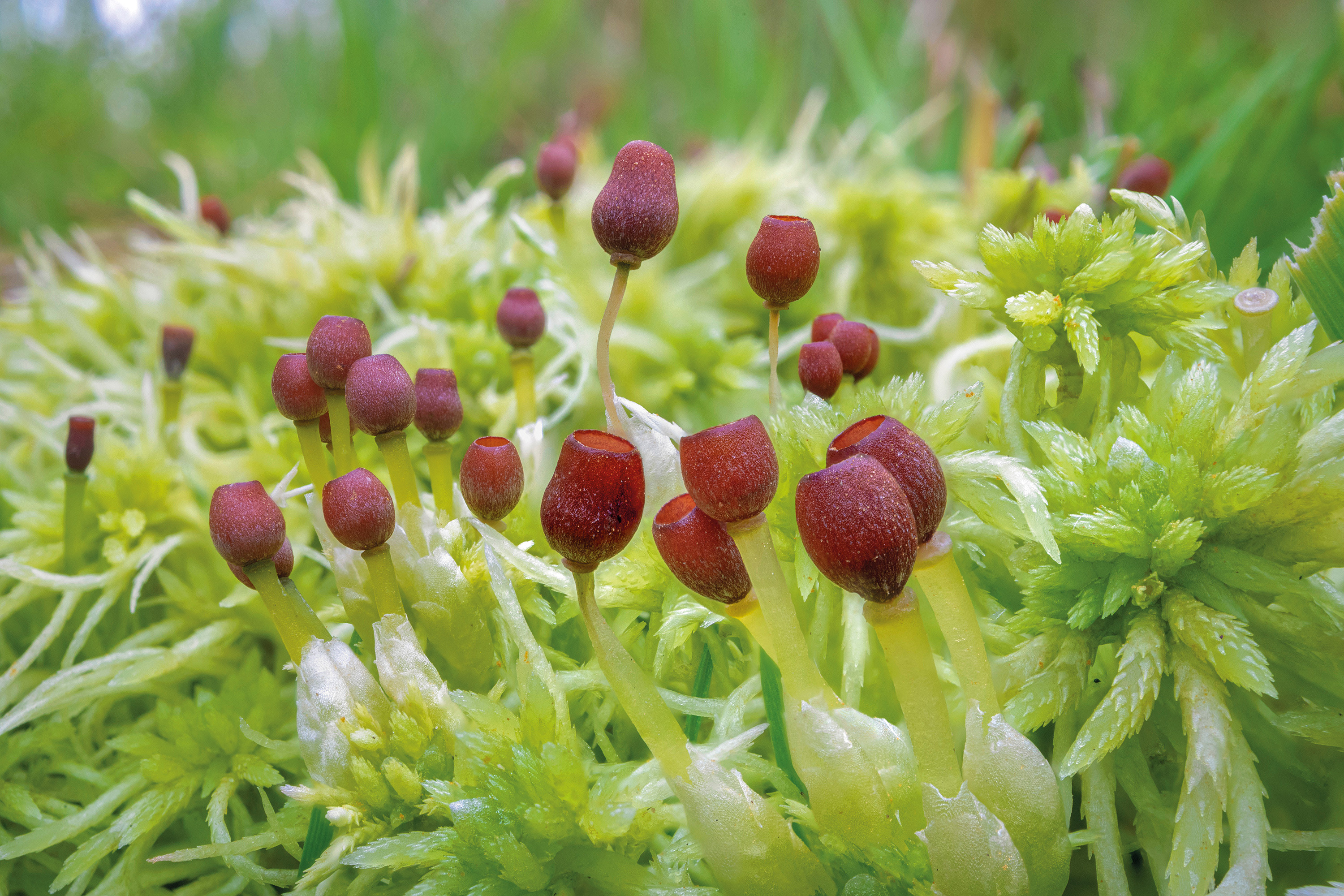
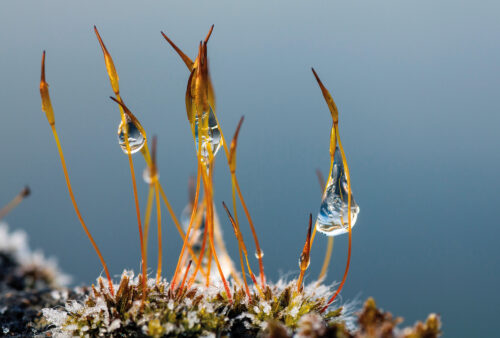
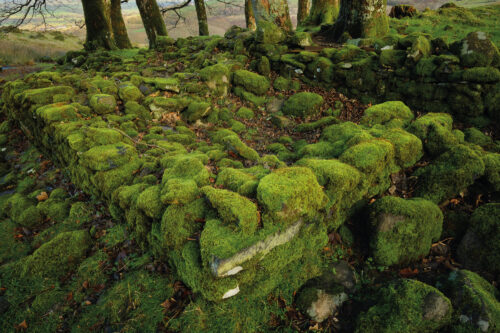
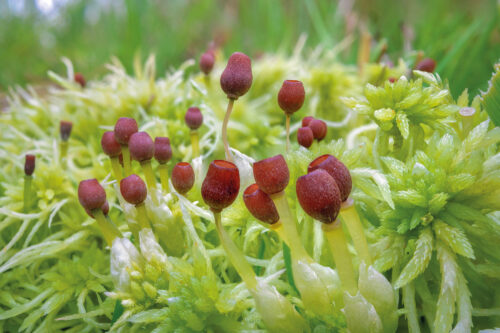
Sphagnum moss Sphagnum reproduces through spores rather than seeds or flowers. After fertilisation, a small stalked sporophyte capsule develops at the tip. Inside, thousands of microscopic spores mature and dry out. Internal air pressure builds until the lid bursts explosively, launching spores into the air. As well as its well-known medicinal benefits, sphagnum moss also plays a major environmental role by forming deep peat deposits over thousands of years thus storing enormous amounts of carbon. The word Sphagnum comes from Greek, meaning a kind of sponge, referring to the moss’s remarkable water-holding ability
Alex Hyde is one of Britain’s leading exponents of close-up nature photography. His award-winning images portray a hidden world of extraordinary beauty. “To this day I delight in revealing tiny details of subjects that would be missed by the naked eye. Many of my pictures involve photographing moving subjects smaller than a grain of rice. Nature provides me with an endless array of fascinating subjects.”


































Join our mail list to stay in touch with announcements, special discounts and news from the natural world.
