
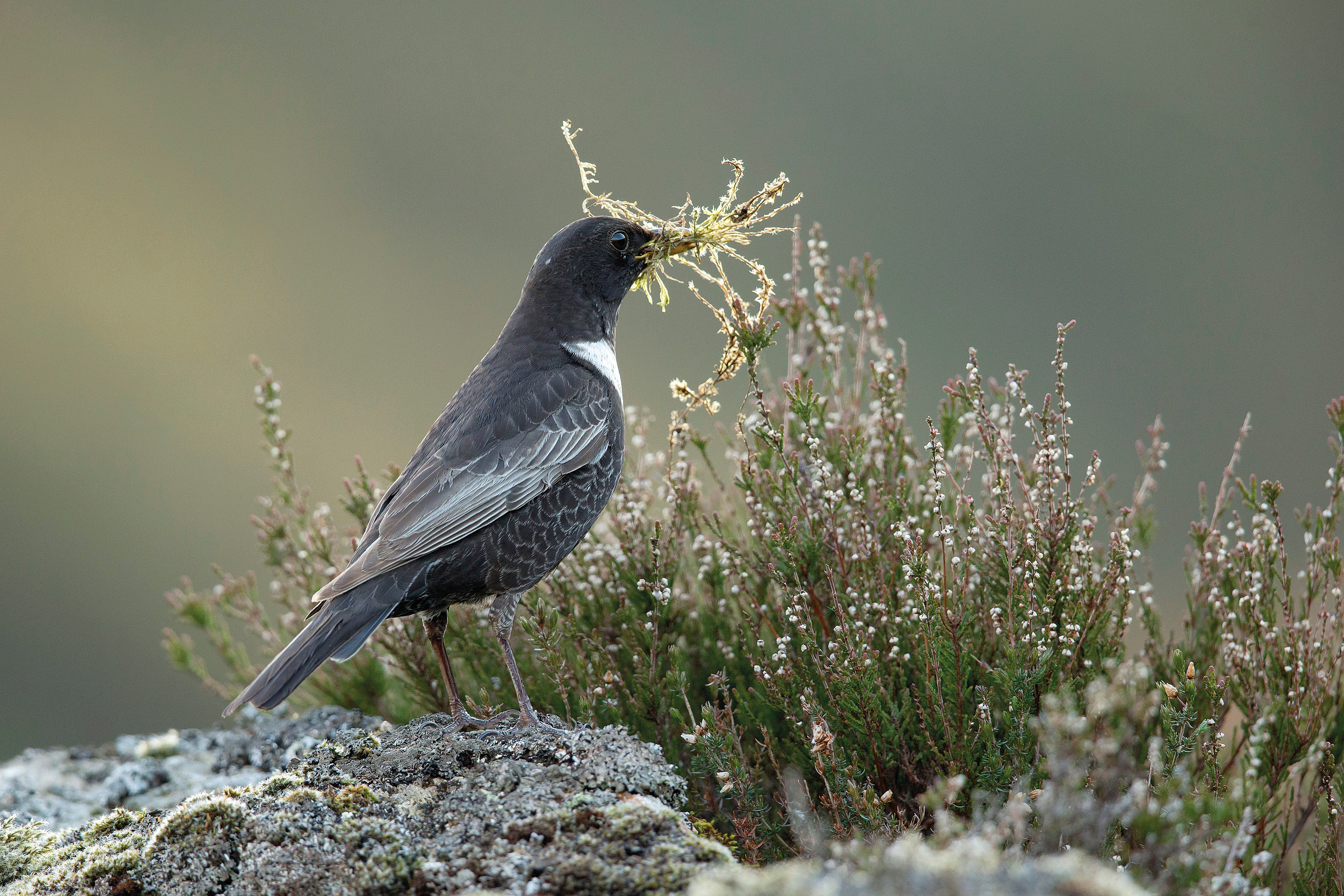
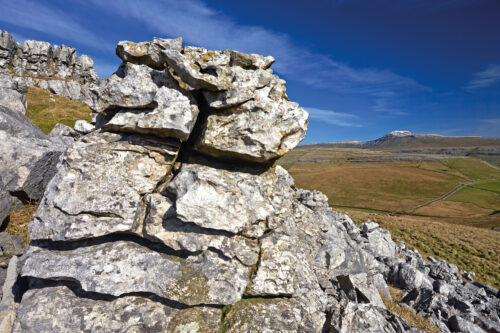
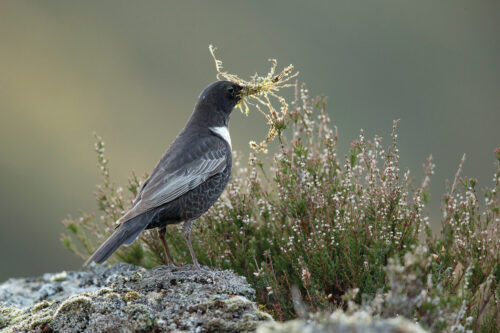
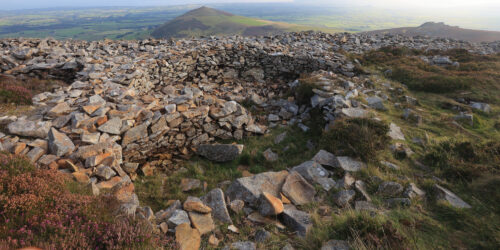
Ring ouzels Turdus torquatus breed mainly in upland habitats such as rock-strewn moorland, steep valleys, scree slopes and open mountain terrain in most areas throughout upland Britain. They favour rough grazing and short upland grassland rich in earthworms, insects and berries. Ring ouzels are now considered a scarce and declining breeding bird in Britain. Reasons for population decline include overgrazing, loss of insect-rich pasture, drainage of upland habitats, climate change and increased disturbance near nesting areas. Earlier springs linked to warming temperatures may also disrupt breeding timing and food availability.
Mark Hamblin has worked as a freelance nature photographer since 1995, creating images for international photographic agencies; providing specialist guiding services and working on multi-media conservation projects.
Mark has published and collaborated on several books including Wild Peak, Wild Land - Images of nature from the Cairngorms, Tooth & Claw and 2020VISION. He was also a contributing photographer for the Wild Wonders of Europe project working on stories in Lithuania and The Netherlands.
Mark is a director of the social enterprise company, Wild Media Foundation, who produce communications material for a range of clients as well as working on their own projects. Their current project, SCOTLAND: The Big Picture amplifies the case for a wilder Scotland, and Mark is part of a team of photographers and videographers currently gathering material for a range of media products.




Join our mail list to stay in touch with announcements, special discounts and news from the natural world.
